Many providers promise to deliver certified components for European Digital Identity (EUDI) Wallets. Although eIDAS 2.0 sets out how wallets have to be certified, the combination of components, assurance levels and test methods involved makes it difficult to understand what it takes for an EUDI Wallet to be certified, and what that certification says about the security of the wallet.
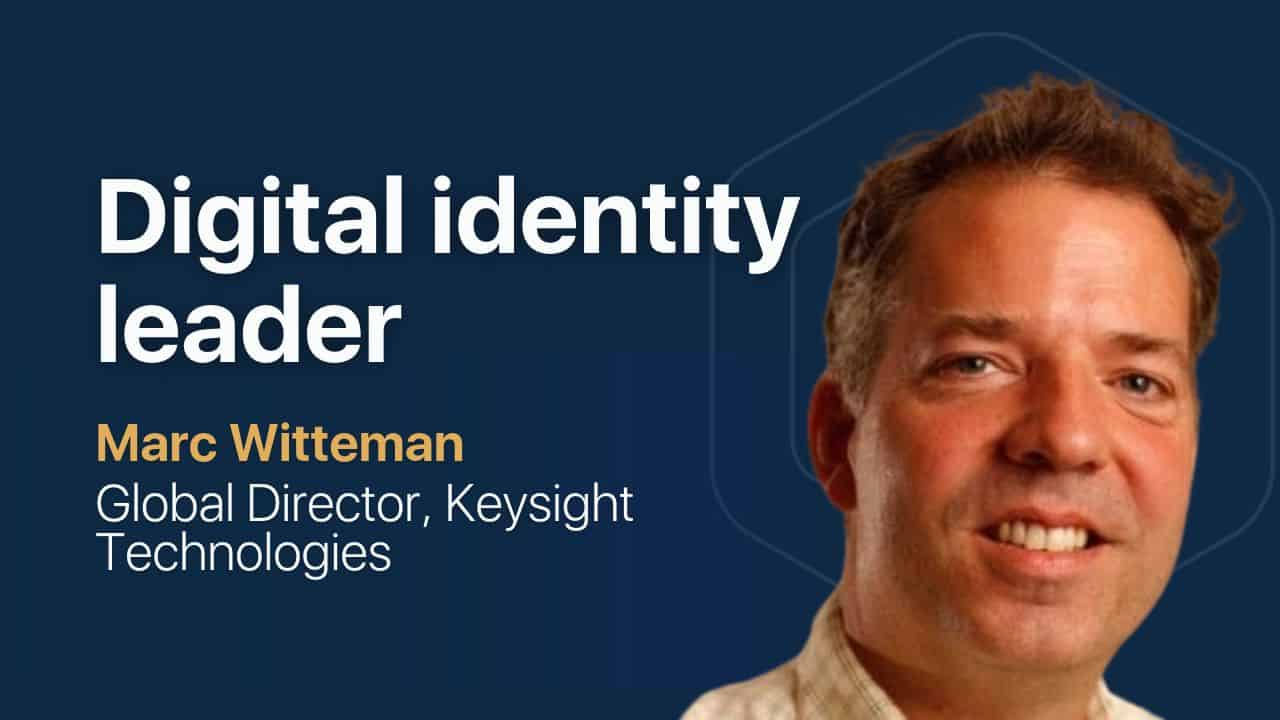
To find out what a certified wallet entails, we spoke with Marc Witteman, who founded the security lab Riscure in 2001 and has spent more than 25 years testing and certifying the security of chips and devices. After Riscure was acquired by Keysight Technologies in 2024, Marc continued this work as Senior Director at Keysight. In this interview, he explains which parts of a wallet need to be certified and what assurance levels and vulnerability analysis mean for wallet providers. He also shares why every certification journey should start with a realistic view of the attacker.
Wallet security depends on both hardware and software
Security incidents in the news almost always involve software, even though that software always runs on hardware, and a digital identity wallet is no exception. “You need to make a system secure on the software side as well as the hardware side,” Marc explains. For a wallet, this means protecting the app as well as the hardware that stores the user’s cryptographic keys, since a weakness found in one device can often be used against every other wallet that relies on the same hardware.
The hardware in a eWallet relies on the same secure chip technology that is used in bank cards, SIM cards and passports, which means its certification follows the same principles. Keysight is one of roughly ten labs worldwide that certify the chips used in bank cards, and as an accredited lab under the Common Criteria-based Cybersecurity Certification ( EUCC) Scheme. That means it evaluates products and helps vendors produce the evidence a certification body needs to confirm that a product meets the safety requirements.
What is EUCC?
The EU Cybersecurity Certification Scheme on Common Criteria (EUCC) is the European scheme for certifying ICT products such as chips, smart cards, hardware and software. Adopted by the European Commission in 2024, it builds on the Common Criteria evaluation framework that was already used across 17 EU member states, so that products are assessed through one process that is understood throughout the EU. Certification under EUCC is voluntary for most products and offers two assurance levels, substantial and high, depending on the risk associated with how a product will be used.
Which wallet components need to be certified
Under eIDAS 2.0, European Digital Identity Wallets must be certified against assurance level ‘high’. The Commission’s implementing regulation on wallet certification specifies which elements fall within the scope of that certification, including the Wallet Secure Cryptographic Application (WSCA), the Wallet Secure Cryptographic Device (WSCD), the wallet software and its environment. The WSCD, which protects the cryptographic keys at the heart of the wallet, is held to the strictest standard. It requires an evaluation at EAL4 combined with vulnerability analysis comparable to AVA_VAN.5, two terms that are explained in the boxes below.
What is EAL4?
Within Common Criteria, the Evaluation Assurance Level (EAL) indicates how rigorously a product is evaluated as a whole, on a scale from EAL1 to EAL7. At EAL2, a product is structurally tested, which makes it the quickest and least expensive level to achieve, although an attacker may need only a few days to break it. At EAL4, a product must be methodically designed, tested and reviewed, and for a product like a wallet the full process currently takes around six months. At EAL7, the highest level, the design must also be formally verified with mathematical models, which takes so much time and effort that this level is rarely used for complex products.
What is AVA_VAN.5?
AVA_VAN stands for vulnerability analysis and indicates how deeply evaluators search for weaknesses by attacking the product themselves, on a scale from AVA_VAN.1 to AVA_VAN.5. At AVA_VAN.5, the highest level, a product must withstand an attacker with high attack potential, meaning an expert with advanced equipment and months of time. A standard EAL4 evaluation includes vulnerability analysis at AVA_VAN.3, and an EAL4 evaluation in which the vulnerability analysis is raised to AVA_VAN.5 is often labelled EAL4+.
What to check in the certificate of a wallet component
Certificates for wallet components can differ considerably in assurance level, depth of vulnerability analysis and scope, which makes them difficult to compare. “For vendors and their customers it is not always easy to understand the meaning of a certificate,” Marc notes, adding that the level makes a real difference for a wallet: “Critical technology attracts well-funded attackers. An EAL2 certified product may be broken with an effort of just a few days, which would make the certificate virtually meaningless.”
Scope is the dimension that is most easily overlooked, since a certificate only covers the components and threats that were included in the evaluation. Protection profiles, which set out the requirements for specific types of products such as smart cards, help clarify what an evaluation covers.
The difference between functional testing and vulnerability analysis
A common source of confusion is the difference between testing whether a product works as specified and testing whether it can be attacked. A functional issue violates a specified requirement, such as a wallet that allows unrestricted PIN entry, while a vulnerability is a non-functional issue that degrades the security of a product and requires a unique attack procedure, such as bypassing the PIN entry through a particular sequence of inputs. “Functional issues can be found through a predefined and static test suite, whereas vulnerabilities are found through creative analysis by an expert,” Marc explains.
The depth of that analysis increases with each AVA_VAN level. At AVA_VAN.4, an example of a vulnerability would be a time-dependent check of a secret value, where an attacker who measures how long the operation takes can recover all parts of the secret step by step. At AVA_VAN.5, an attacker who can time a well-formed glitch with nanosecond precision may be able to bypass a single authentication check altogether. These tests are not scripted in advance, since the lab has to use its creativity during the evaluation to work out where the system could fail, based on its understanding of how the system works.
Testing everything is impossible, which is why evaluations follow a risk-based methodology that focuses on where the risk is highest, so a lab might run ten tests rather than a thousand. “If you don’t do your risk analysis properly, you might run ten relatively unimportant tests and miss the most important things,” Marc says. Labs may use a vendor’s own test results, although they must also run their own tests, since relying only on the vendor’s results could mean falling into the same blind spots as the developer. “You never test everything, so what you sell is what we call assurance in our field, meaning the confidence that a product is good even without a guarantee,” he adds.
Testing an eWallet against a well-funded attacker
AVA_VAN.5 assumes an attacker with strong capabilities, which sets a high bar for the evaluators as well. They need a deep understanding of fields such as physics, mathematics, electronics, cryptography and computer science, along with access to advanced equipment such as fast oscilloscopes, signal generators, probes and lasers. They may also spend several months testing and verifying how robust a product is before it earns the rating.
Marc points to a recent case involving the Ledger Nano, a hardware wallet used to store cryptocurrency, to show what such an attacker is capable of. Devices sold through a shop in Malaysia had been modified with a hidden 5G modem that sent everything users did with their wallet to the attackers, leading to thefts of around 93 million dollars. “It was put together so neatly that I think whoever carried out the attack invested at least millions, perhaps several millions, and must have worked on it for more than a year,” he says.
The case illustrates what Marc calls the attacker’s business case. “An attacker is never willing to spend more money than he can earn, although he is willing to spend more when the potential gain is high,” he explains. Wallets that hold identity data and credentials represent considerable value to an attacker, which means wallet providers have to assume they will face attackers with serious resources.
How long the certification process for a wallet takes
Time to market is a major concern for vendors, and Common Criteria initially performed poorly in that respect. When Riscure started its certification work, the first projects took more than a year, and some labs in Germany spent over two years on a single evaluation. “That would be unthinkable now,” Marc says, pointing out that a manufacturer like Apple releases a new iPhone every year and cannot ask customers to wait three years before they can buy it. Over the years, the methodology has been adjusted to help labs reach a conclusion about a product’s strength more quickly, with Marc’s team contributing to some of those changes.
Today, wallet providers should expect the full process to take around six months. It starts with the vulnerability assessment, in which the lab studies the product to identify potential problems, followed by around three months of hands-on testing and finally the reporting. Labs try to save time by starting while the product is still in development, reviewing documentation and testing prototypes, so that only the issues they find need to be retested later. For wallets that need to be certified in the coming months, this means the evaluation should ideally be underway already.
How wallet providers can prepare for certification
Marc’s advice for organisations at the start of their certification journey is to begin with the threats they want to protect against, followed by the expectations and requirements of the market. “Think carefully about what your users will use the wallet for, what an attacker could do with that information and what it would be worth to an attacker to break it,” he says. “Then you need to make your countermeasures so strong that an attacker with that budget still cannot get through.”
That threat model also determines which parts of the wallet need the deepest level of scrutiny and which assurance level is appropriate for each of them. From there, wallet providers need to build the expertise to make their defences strong enough, since the certificate will only be as meaningful as the protection it confirms.
Digital identity wallets will hold some of the most valuable data citizens have, which makes them an attractive target for attackers who are prepared to invest time and money. For wallet providers, the question therefore goes beyond whether a wallet is certified, since the assurance level, the depth of the vulnerability analysis and the scope of the evaluation determine whether the certificate will hold up against the attacker the wallet will eventually face.