“We are slowly but surely losing our digital sovereignty and our digital autonomy. Not because we lack knowledge or innovation, because those are absolutely there, in our companies and in our research institutions. But we are not able to turn that potential into real systems that work at scale.”
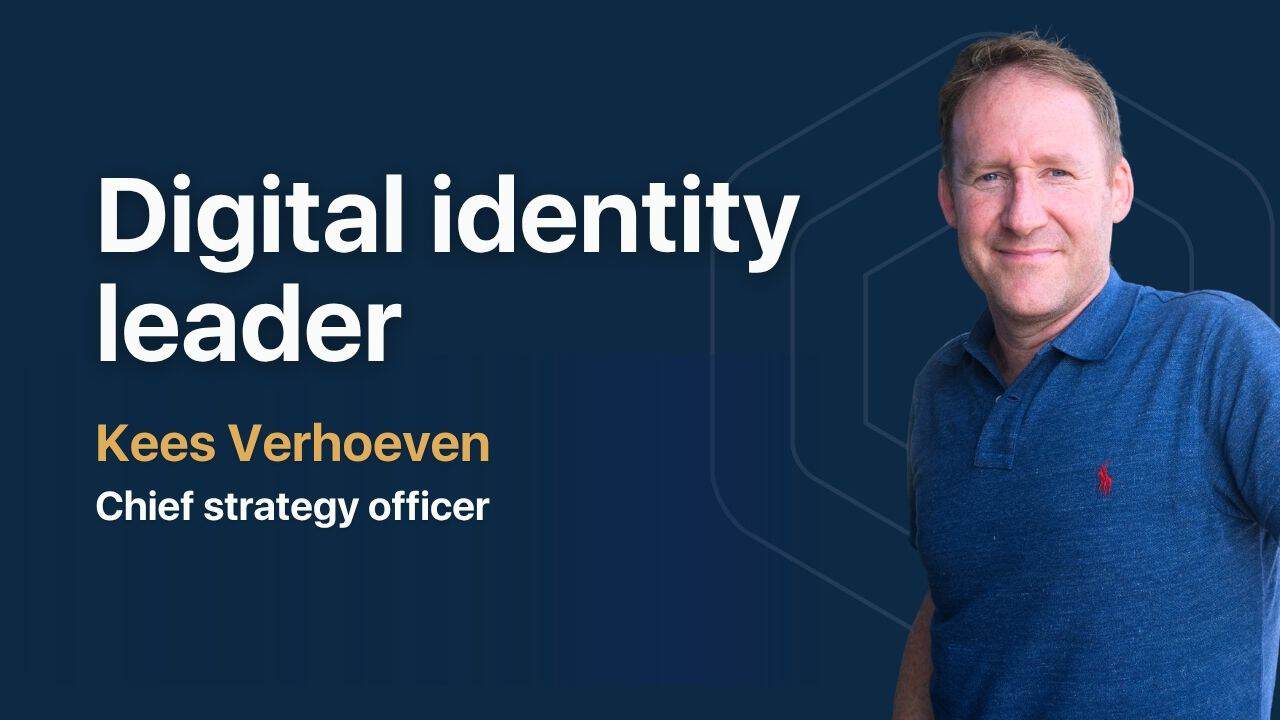
Europe wants to be digitally ambitious, but according to Kees Verhoeven that ambition keeps colliding with reality. During his time from 2010 to 2021 as a member of the House of Representatives of the Netherlands (Tweede Kamer), he repeatedly raised questions about digital power, data and dependency.
This article explores why digital identity has become a strategic issue for Europe, why progress remains slow despite clear legislation, and why the European digital wallet sits at the intersection of sovereignty, trust and economic power.
“If we don’t organise this ourselves, others will do it for us”
For Kees, the discussion about digital wallets cannot be separated from the growing power of Big Tech. “We are slowly but surely becoming more dependent,” he warns. “On platforms, on systems, and on companies that are not European.” That dependency does not appear overnight. “It happens step by step, often without us really noticing it.”
He points out that Europe still talks mainly about innovation, while control over digital infrastructure quietly shifts elsewhere. “We talk a lot about technology and AI, but when it comes to the core building blocks of the digital landscape, we are not strong enough.” Those building blocks include identity systems. “If you do not have grip on digital identity, you also do not have grip on who sets the rules.”
That is where the wallet comes in. Not as a consumer product, but as infrastructure. “If we do not organise this ourselves, others will do it for us.” And in practice, that means Big Tech. “Then you lose grip on your data, on your systems, and on the core digital infrastructure of your society.” The wallet, in Kees’ view, is one of the few places where Europe can still choose. “This is exactly the kind of technology where we can decide whether we build it ourselves or outsource control.”
“The wallet is about people having grip on their own data”
When Kees talks about digital identity, he immediately moves away from abstract concepts. “It is often described as a digital passport or a digital wallet. Those words help a bit, but they do not fully cover what it really is.”
“You should see it as saying: I am a person with certain characteristics and information. I want to be able to share that information with organisations, but in a way where I stay in control. So not that my data is everywhere, copied and stored by everyone, but that I have it myself, in my own environment.”
That environment is what we now call the wallet. “In that wallet you have building blocks of your life. Your diploma, your medical information, your permits. And you can use those building blocks to share exactly what is needed with an organisation that asks for it.” That could be a hospital, an educational institution or a public authority. “It makes administrative tasks much easier.”
He contrasts that with the current situation. “If you look at myoverheid.nl and see how much information the government has about you, you will be surprised. And it is information you do not really have control over yourself. There is a lot of copying, linking and sharing going on, without people really knowing.”
“This is also about trade, economy and doing business”
The value of digital identity is not limited to public services. Kees stresses the economic dimension just as strongly. “Think about doing business across borders. Think about permits, diplomas, setting up a company in another country, or dealing with notaries. Right now, every country has its own digital counter. Different logins, different systems, different attachments.”
That fragmentation creates friction. “People get frustrated because they cannot get their data to the organisation that needs to help them.” A European wallet could fundamentally change that. “If you reach a point where you can use one wallet, in different countries, in different domains, to do the transactions that are part of your life, you make it much easier. And at the same time, you improve control.”
This is why Kees sees digital identity as infrastructure. “It is not a niche technology. It is something that touches healthcare, education, government and the economy at the same time.”
“This is not a big European database”
Criticism of the European wallet often focuses on fear. Fear of surveillance. Fear of centralised data. Kees understands where that comes from. “People hear Europe, data and government, and they think: here comes another bureaucratic control system.”
But he insists that this is a misunderstanding. “This is not a big European database. It is actually the opposite. It is an agreement that everyone can have their own environment, their own wallet, with their own data, and use it for their life.”
Still, trust will not come automatically. “I can say this, a future minister can say this, a European commissioner can say this. But in the end, people will only trust it when they experience it.” That requires honesty. “We have to be honest about how it works, what it costs, what it does, and also about the fact that digitalisation is not easy for everyone.”
“We are becoming dependent, step by step”
For Kees, the biggest risk sits underneath all of this. “We are slowly becoming more dependent. On technology, on platforms, on companies that are not European.” He points to recent developments around DigiD. “DigiD is the beating heart of the Dutch digital government infrastructure. And parts of it are now being taken over by an American party. That should make us think.”
The issue is not cooperation. “I am not against working with American or Chinese companies.” The issue is position. “If you do not have strong positions yourself, you also do not have real control.”
He draws a clear parallel. “The reason Europe still matters in the global chip industry is because of ASML. We have a critical building block. Digital identity could be something similar. But only if we take it seriously.”
“This is about sovereignty and about responsiveness”
Kees sees digital identity as part of a much bigger picture. “We often talk about sovereignty, about being strong in the world. But we also want a society where government works well for its citizens. Where it is responsive.”
The wallet touches both. “It can help protect our autonomy, but it can also make life easier for people. Faster services, less friction, more control.” That combination is why he keeps pushing the topic. “You solve two problems at once.”
Whether Europe will seize that opportunity remains an open question. But for Kees, the direction is clear. “If we do not act, others will. And then we should not be surprised that we become dependent on Big Tech.”