
Trusted by






The problem with existing trust service architectures
Many digital wallet and trust solutions are built on heavy, layered technology stacks that have grown over time to meet security and regulatory demands. The result is infrastructure that is expensive to run, difficult to oversee, and dependent on multiple systems and vendors. That complexity increases operational burden and expands the potential attack surface, making the overall setup harder to control and, in practice, more exposed to risk.
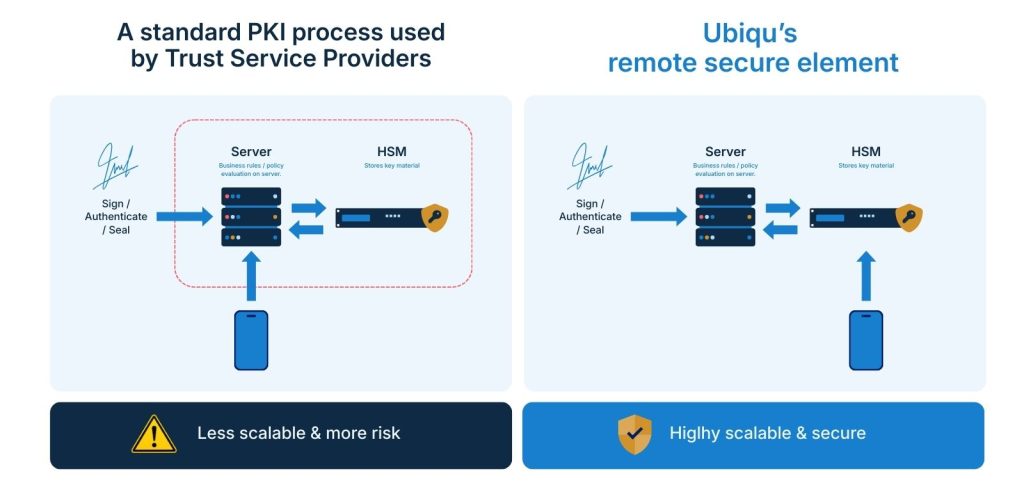
Most wallets and trust services are built on infrastructure that is harder to run than it needs to be. While cryptographic keys are protected properly, the decisions about when those keys may be used are handled elsewhere, spread across platforms or custom systems. This forces organisations to choose between adopting a rigid, closed solution or investing heavily in building and maintaining complex infrastructure themselves.
What the Remote Secure Element is
The Remote Secure Element is the secure core that wallets and trust services use to create qualified signatures and protect digital identities in wallets. It is built around a Hardware Security Module, widely regarded as one of the most secure ways to protect sensitive cryptographic material. By concentrating the most critical security functions in this one protected, certified environment, it reduces architectural complexity, lowers operational costs, and limits the components that need to be secured and audited.
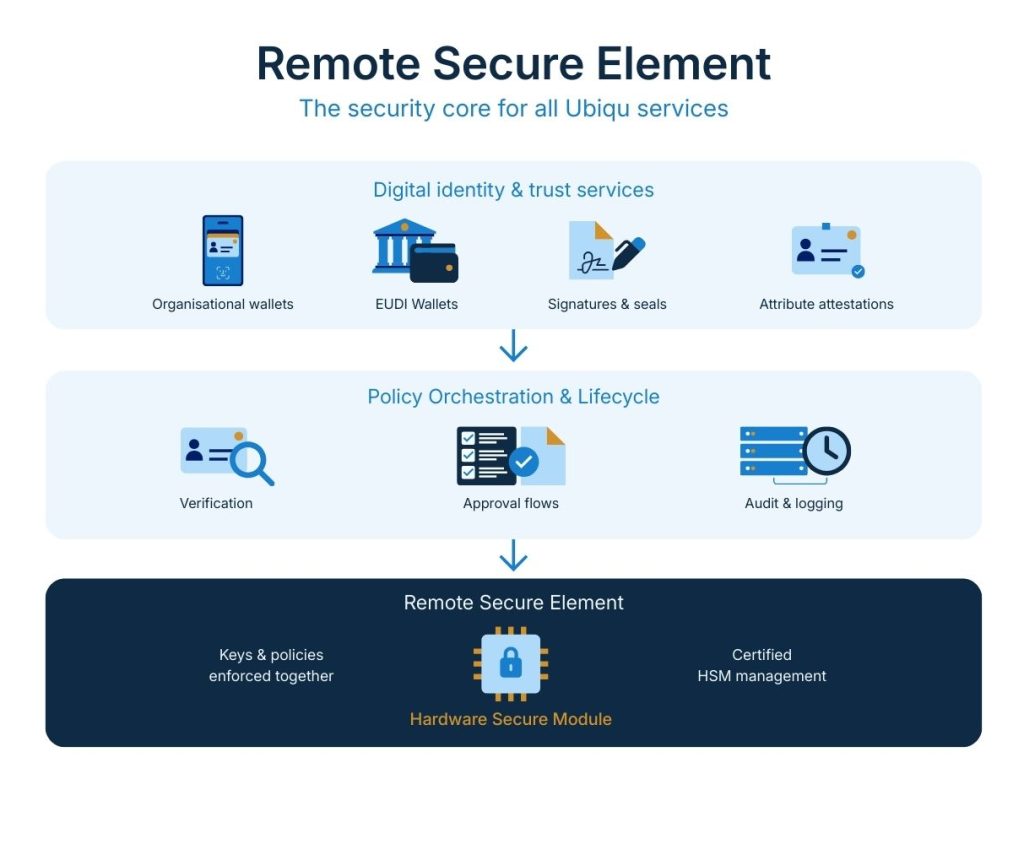
The Remote Secure Element is a policy enforcement runtime implemented as code inside certified Hardware Security Modules (HSMs). It combines cryptographic key custody with policy evaluation, so that decisions about key usage are enforced within the same secure boundary as the keys themselves. External systems handle orchestration and lifecycle management, while the RSE ensures that signing, sealing, and authentication operations only occur when all policy conditions are met.
A secure core for digital identity
The Remote Secure Element acts as the shared secure core in a modular digital identity setup. Instead of relying on one large, closed platform, organisations combine separate components for verification, lifecycle management and auditing around this protected foundation. By enforcing security consistently in one place, it allows wallets and trust services to evolve independently while relying on the same high-assurance base.
Operationalising the Remote Secure Element
The Remote Secure Element acts as a security foundation that can be applied where high-assurance identity, access, or trust services are required.